So, what is a resume chatbot? It is a chat tool that answers questions about a person’s resume in plain conversation. It relies on natural language processing and usually a large language model. It supplements the document and does not replace it.
The idea sits inside the wider topic of the resume chatbot. This page defines it, shows the mechanism, and separates it from a plain resume, a general chatbot and a portfolio site.
The building blocks: chatbot, language processing and language model
A resume chatbot combines three ideas, and each has a plain definition from Lesley University’s support guide to AI chatbots.
- Chatbot. An AI chatbot is a computer program that can communicate with people using natural language. The reader types a question in ordinary words and gets a reply in ordinary words.
- Natural language processing (NLP). NLP helps the chatbot understand what the user is saying, even if the user does not say it perfectly. A recruiter does not need to phrase a question in any special way.
- Large language model (LLM). An LLM is built from large collections of words and phrases, usually gathered from the internet. Chatbots use it to find patterns and decide which words should go together to make a response.
A resume chatbot is these parts pointed at one subject: one person’s work history, skills and education. The same technology that powers a general assistant is narrowed to a single document or profile, and that narrowing is what makes it a resume chatbot and not just a chatbot.
How a resume chatbot answers a question
The Lesley guide describes a two-stage process. When a user sends a prompt, the chatbot uses NLP to interpret what the user wants. Then it uses its LLM to compose a response. In a resume chatbot, the resume content is the material the reply should be built from.
The stages in order
- Load the resume. The chatbot needs the resume as text. One community-built resume assistant described on the Streamlit forum uses a library called pdfplumber to extract text from uploaded PDFs, which shows how a document becomes usable input.
- Interpret the question. NLP works out what the reader means, even if the wording is loose or imperfect.
- Compose the answer. The LLM uses learned word patterns to write a reply, which the chatbot should base on the resume text.
- Return the reply in the chat window. The reader sees a conversational answer instead of a page to scan.
Pre-written replies versus generated replies
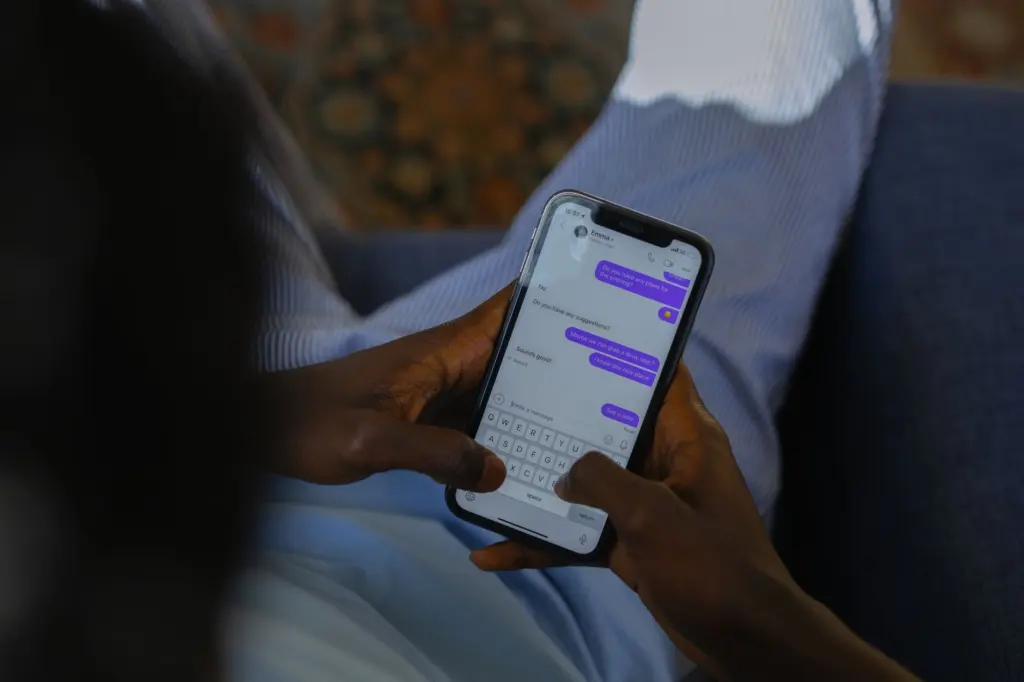
Older, scripted chatbots pick from a fixed set of pre-written answers. The Lesley guide says AI chatbots built on LLMs differ: they do not use pre-written responses and formulate each reply on the spot. This matters for a resume. A scripted bot can only answer questions its author predicted. A generative bot can handle a question nobody planned for, such as how two roles relate, because it composes the answer instead of looking it up.
That flexibility has a cost. A generated answer is only as good as the text it is anchored to and the model’s habit of staying within it, which is why the limits section below matters.
A short worked exchange
The exchange below is an invented illustration, not a real candidate. Imagine a resume that lists a coordination role and a reporting project built in spreadsheets.
- Recruiter: Have you managed reporting before?
- Chatbot: Yes. The resume describes a reporting project built in spreadsheets during a coordination role, where the work was gathering team updates into a regular summary.
- Recruiter: Do you have experience with a language the resume does not list?
- Chatbot: The resume does not mention that, so I can only speak to the skills it lists.
Both replies are the behaviour to look for. The first answers in conversational prose by drawing on content the document already holds. The second declines to invent. Because the Lesley guide warns that chatbots sometimes provide biased or fabricated information, a resume chatbot is more trustworthy when it stays inside the document and says so when the document is silent.
How it differs from a resume, a general chatbot and a portfolio site
Versus a plain resume
A plain resume is a fixed document. The reader scans it and has to find the relevant lines themselves. A resume chatbot adds an interface on top of the same facts, so the reader asks for what they care about and gets it. The document remains the source of truth, and the chatbot is a way to query it.
Versus a general chatbot
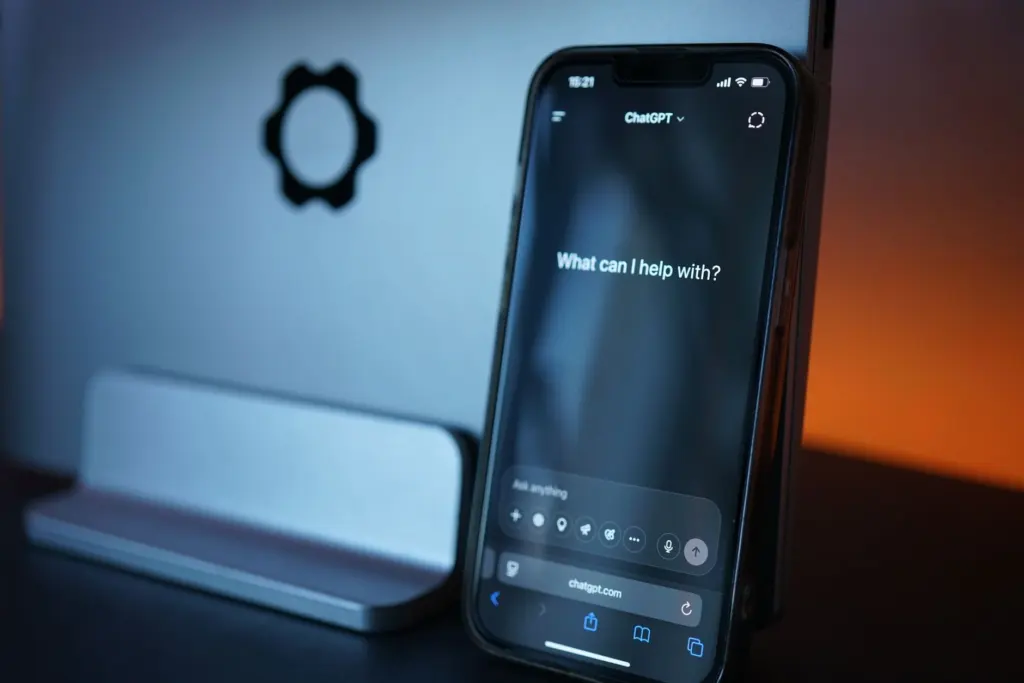
General chatbots are broad. The Lesley guide notes that many can help draft stories, generate pictures from words and compose computer code. A general chatbot has no particular knowledge of your work history unless you supply it. One resume-assistant builder on the Streamlit forum makes this contrast, saying that with ChatGPT you have to manually input details, whereas their app personalizes suggestions from existing profile data. A resume-writing site, Copilot Resume, makes a related point: a general chatbot gives you plain words you still have to format. Treat both as the vendors’ own positioning, but the underlying distinction is sound. A resume chatbot is scoped to one person’s material, and a general chatbot is scoped to nothing in particular.
Versus a portfolio site
A portfolio site is a place, and a resume chatbot is a feature. A portfolio shows work samples, projects and a biography on pages the visitor browses. A chat widget on that site lets the visitor ask about the resume content without hunting for it. The two combine well, and the guide to how to add chatbot to personal website pages covers that placement.
Who uses a resume chatbot and who reads it
The job seeker sets it up and publishes it. The reader is typically a recruiter, hiring manager or interviewer who has a specific question and little time. Each side gets something different from the same tool.
- For the candidate. It lets the same resume content answer many different questions, so a reader with a narrow interest does not have to read everything.
- For the reader. It replaces scanning with asking. The reader can phrase a question loosely, because NLP is designed to interpret what the user means.
- For tone. A study in the National Library of Medicine’s PubMed Central found that LLM chatbots can tailor the readability and tone of summaries to the target audience. That suggests a resume chatbot can answer a technical recruiter and a non-specialist in different registers, although the study examined plain language summaries and did not test resume chatbots.

What a resume chatbot cannot do reliably
A resume chatbot should not be treated as an authority. The Lesley guide warns that because chatbots were trained with internet data, they sometimes provide biased or fabricated information, and it advises users to double-check. For a resume this means a reply can state something the document never said, which would be damaging in a hiring conversation.
The PubMed Central study offers a balanced picture. It compared six chatbots (ChatGPT, Claude, Copilot, Gemini, Meta AI and Perplexity) on plain language summaries. Human-written summaries scored 8.89 overall, while the chatbots scored between 8.56 and 8.98, and the post-hoc comparison found no significant difference in quality. The chatbots also produced summaries with lower reading grade levels, so they are good at simplifying. The authors still caution that LLM chatbots may introduce minor inaccuracies, so their output should be checked for accuracy.
Three practical decisions follow from this.
- Keep the resume accurate. The chatbot can only be as correct as the text behind it, so update the source document first.
- Review the conversations. Read sample answers for invented details before the chatbot goes in front of a recruiter.
- Keep the original resume available. It remains the reference when a chatbot answer is unclear or wrong.
If you are ready to make one, the walkthrough on how to build a resume chatbot turns this definition into steps.
Frequently asked questions
Does a resume chatbot replace the resume?
No. It answers questions from the resume content, so the document is still the source it depends on. Keep both and update the document first.
Which chatbots are examples of LLM chatbots?
The PubMed Central study compared ChatGPT, Claude, Copilot, Gemini, Meta AI and Perplexity. It notes that ChatGPT was introduced in 2022. These are general chatbots, and a resume chatbot is a narrower use of the same kind of technology.
Does a resume chatbot need natural language processing?
Yes. NLP is the stage that interprets what the reader means, even when the question is phrased imperfectly, before the language model composes a reply.
Can a resume chatbot present information in the reader’s preferred style?
Language model chatbots can adjust readability and tone for a target audience, according to the PubMed Central study. A resume chatbot can use that ability, but the facts in each answer should still come from the resume.