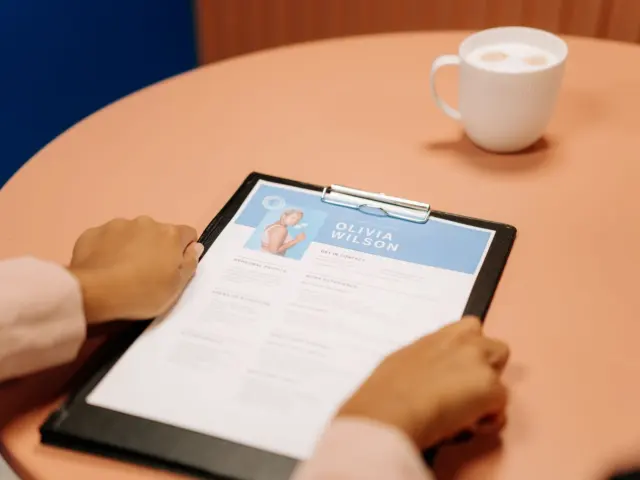
With an application due soon, the best resume tips are practical: keep to one or two pages, list experience in reverse chronological order, match your skills to the posting, and pair the resume with a tailored cover letter.
This guide sorts the job search by what you are trying to do, from drafting the document to walking into an interview. If you are starting from nothing, the step-by-step guide on how to write a resume pairs well with the sections below, which explain the decisions that shape every version of the document.
Choose your route
Pick the route that matches your situation, then read the sections in the order given. Each route points to the parts of this guide that matter most and, where one exists, to a deeper page.
- Updating a resume you already have. Read the length and format section, then the tailoring section. Adapting a solid base document for each posting is the approach university career guidance recommends, and it is a smaller job than rebuilding from zero.
- Starting with little or no work history. Read what a resume includes, then the skills section. The guide on how to write a resume with no experience goes further, and younger applicants can head straight to the page on resume for teenager first job.
- Returning after a break. Focus on the experience bullets and the skills section, and read how to explain a gap in your resume for ways to handle the timeline honestly.
- Applying in academia, research or science. Georgetown’s graduate career center notes that applications in academia, research or science may ask for a curriculum vitae rather than a resume. The comparison table in the length section and the page on resume vs cv will help you decide which document you need.
- Applying for a government role. Federal applications are a specialised case, and the guide to federal resume format covers them.
- Preparing to meet employers. Go to the cover letter section, then the sections on interviews, job fairs and interactive formats.
What a resume includes
A resume combines a contact block, work history, education and a skills section, and every extra item earns its place only if it helps a reader judge your fit for the job. The University of Kentucky’s resume best practices set out the contact and experience basics, and the points below build on them.
Contact block and LinkedIn
The contact block needs your full name, a phone number and a professional email address. A LinkedIn link belongs there only if the profile is current and complete, according to the same University of Kentucky guidance. Treat the link as a promise. A reader who clicks should find the same job titles, the same dates and the same story the resume tells. If the profile lags behind the document, update it before you send the link, or leave the link out until it is ready.
Opening statement
Many resumes carry a short statement under the contact block. A summary describes what you already offer, while an objective states the role you are aiming for. Choose the one that fits your situation and write it for the specific posting rather than for employers in general. Worked wording for both is in resume summary examples and resume objective examples.
Experience and education
List your work history in reverse chronological order, starting with your most recent position, as the University of Kentucky advises. Education sits alongside it, and how to list education on a resume explains how to present it. If your most recent role is not your most relevant, keep the recommended order and let the bullets under each role carry the relevant evidence. The page on how to write work experience on a resume develops the section in detail.
What to leave off
The University of Wisconsin economics department’s careers guidance tells applicants not to include personal information such as age, gender or marital status, or photographs. The University of Kentucky says to include hobbies and interests only if they are relevant. A hobby earns its line when it demonstrates something the posting asks for, such as organising events for a coordinator role. The page on hobbies and interests on a resume helps you decide case by case.

Resume length, format and templates
Most applicants should limit a resume to one or two pages. The University of Kentucky’s career development team puts it plainly: keep the resume concise. Longer documents appear mainly in academic applications, where Georgetown’s graduate career center gives page ranges by career stage.
| Situation | Typical page range | Planning use |
|---|---|---|
| Most applicants | One or two pages | Treat this as the default and cut older or less relevant material to stay within it. |
| Early-stage doctoral student | 2 to 4 pages | Allows room for research and teaching, but still select what fits the role. |
| Advanced doctoral candidate (after comprehensive exams) | 4 to 7 pages | Expect a fuller record of publications and projects; confirm whether the employer wants a resume or CV. |
| Postdoctoral scholar or faculty applicant | 6 to 10+ pages | Fits long academic records; use only when the application asks for a full academic document. |
The one-or-two-page limit comes from the University of Kentucky’s resume best practices, and the doctoral and later-stage ranges come from Georgetown’s resume and cover letter resources.
Read the table as a decision aid rather than a target. If you work outside academia, the longer ranges do not apply to you, and trimming is almost always the better instinct. If you are applying for research or faculty posts, the posting should tell you whether it wants a resume or a CV. The comparison in resume vs cv explains how the two documents differ in purpose.
Type size and fonts
The University of Kentucky recommends headings of 11 to 14 pt, slightly larger than body text at 10 to 12 pt. It names Aptos, Arial, Calibri, Cambria and Garamond among easily readable fonts. Pick one of them and use it throughout. Keep headings only a little larger than the body so the page reads as an even document and not a poster, and use bold sparingly so that it still signals something when it appears.

Format and templates
Reverse chronological order is the format that the University of Kentucky guidance assumes for experience. Other layouts exist, and the guide to the best resume format compares them by situation. A template should serve your content and not the other way round, so choose a layout that holds your real material without cramming. A collection of free resume templates gives you starting points to adapt.
Writing experience bullets
Strong bullets begin with an action verb, in present tense for your current job and past tense for previous jobs, as the University of Kentucky advises. The bullets are where most of a resume’s persuasion happens, because they show what you did and not just where you worked.
Verb choice and tense
Open each bullet with the action and then add the context that makes it meaningful. “Trained new colleagues on the booking system” tells a reader far more than a bare job title, and it keeps the verb tense rule easy to follow. Vary your verbs so that the list does not read as repetition, and put the strongest, most relevant bullet at the top of each role.
Phrases to cut
The University of Wisconsin economics department’s resume guidance says not to use the phrases “responsible for” or “duties include.” They describe a job description rather than your contribution. Replace “responsible for training” with the training you actually delivered and what it covered. If you cannot turn a line into an action, ask whether it belongs on the page at all.
Proofreading
The same Wisconsin guidance warns that many employers will immediately disqualify a candidate who does not proofread. A typo is a cheap error to fix and an expensive one to leave in. Read the document aloud, check dates and job titles against your own records, and ask another person to read it too. Do this after every round of tailoring, because edits made late are the ones that introduce mistakes.
Listing skills
List skills in a dedicated section, usually a bulleted list in two or three columns, showing the technical skills that match the job description. That is the University of Kentucky’s advice in its career development guidance, and it also asks for soft and specialised skills that are verifiable.

Matching the posting
Start from the posting, not from a generic list. Mark the skills it names, then keep only those you can back up with a bullet in your experience section. A skill that appears in the list but nowhere else on the page invites doubt, whereas one that is also demonstrated in a bullet reads as credible. Trim items the posting does not mention, so that the relevant ones stand out. The page on skills to put on a resume goes through categories and wording.
Making skills verifiable
Soft skills are the hardest to prove, so show them through what happened. Teamwork, for example, becomes visible when a bullet describes a group project and your part in it. Specialised skills, such as a software package or a laboratory method, can sit in the list and also appear in the bullet where you used them. This pairing of list and evidence is what makes the list persuasive.
Tailoring for applicant tracking systems
A resume that works for screening software and for people alike is tailored to each posting, with the skills and experience the job description names made easy to find. The University of Kentucky says to feel free to tailor the resume for each application by emphasising relevant experiences and skills. No formatting trick substitutes for content that visibly matches the posting.
Tailoring steps
Work through the posting in order and adjust the document to fit it.
- Read the posting for requirements. Mark the skills, tools and responsibilities it names most prominently.
- Compare against your skills section. Reorder or add skills you truly have so the most relevant appear where a reader looks first.
- Adjust the bullets. Bring forward the experience that matches the posting and shorten what does not.
- Use the posting’s own terms where accurate. If you did the work described, use the same name for it; if you did not, leave it out.
- Proofread again. Each tailoring pass is a chance to introduce an error.
Speed matters because readers are quick. The University of Wisconsin economics department’s careers page notes that employers commonly spend 30 to 60 seconds reviewing each resume or cover letter. In that window, a document that mirrors the posting’s priorities is easier to approve than one that makes the reader hunt.
Checking your work with feedback tools
Career centres now offer interactive help. Georgetown’s graduate career center describes a resource whose key features include instant feedback on your resume and resume tailoring comparisons. If your own university or alumni network offers something similar, use it between drafts, because comparing a resume against a posting is exactly the step most applicants skip.
Cover letter
A cover letter should be tailored to the specific job posting and written in your own words, according to Georgetown’s graduate career resources. The University of Wisconsin economics department adds that it should not exceed 1 page, typically 3 to 4 paragraphs, in its resume and cover letter guidance.
Use the letter to connect the posting to evidence already on your resume, not to retell the resume. A reader who has the resume open should learn why this role and this employer, and which part of your experience matters most for it. That is the job a short letter does well. Because the letter should be in your own words, treat any drafting help as a starting point and rewrite until it sounds like you.
Keep the two documents consistent. The job title you use for yourself, the names of employers and the dates should match exactly, and the visual style should too. Presenting them as a pair is a small signal of care, and it makes the whole application easier to read quickly.

Interviews, job fairs and networking
Your resume does not stop working once the interview starts, because interviewers often use it as their map of your background. Prepare as if every line is an invitation to ask a question.
Interviews
Go through your resume line by line and prepare a short account for each bullet: what the situation was, what you did and what resulted. If a skill appears in your list, be ready to describe where you used it. The same applies to your LinkedIn profile, which an interviewer may open alongside the resume, so make sure the two agree.

Job fairs and conversations
At a job fair, conversations are short and the resume is a leave-behind. Bring clean copies tailored to the kinds of roles on offer, and keep a version you can edit so you can adapt it quickly afterwards. Research the employers beforehand and decide which postings you want to ask about, because a specific question gets a more useful answer than a general one. Afterwards, follow up with a message that references what you discussed, and make sure your LinkedIn profile is ready if someone looks you up.

Presenting yourself in interactive formats
Interactive formats, from feedback tools to conversational profiles, work best when they draw on the same verified content as your resume. The resume stays the anchor, and everything else is a different way of showing it.
If you use an AI assistant to draft or tidy wording, treat the result as a draft. The page on how to use chatgpt to write a resume covers that process. Whatever tool you use, check each line against your real record, because a polished sentence that overstates your experience becomes a problem the moment an interviewer asks about it.
The same discipline applies if you build a conversational version of your resume, such as a chatbot that answers questions about your background. Feed it the experience, skills and education that already appear on the page, keep the wording consistent with the document, and update both together. That way, a reader who meets you in either format finds the same story.
Frequently asked questions
| Question | Answer |
|---|---|
| Should I put references on my resume? | No. The University of Wisconsin economics department’s guidance says not to include references on a resume, along with photographs and personal details. |
| Do I need to include my home address? | No. The University of Kentucky says your physical address is not necessary; a name, phone number and professional email are enough. |
| Should I write in full sentences with “I” and “my”? | No. The University of Kentucky recommends short statements instead of complete sentences, and avoiding personal pronouns such as I or my. |
| Can I use any resume template? | Only one you can edit. The University of Wisconsin economics department advises against a template whose format you cannot change. |